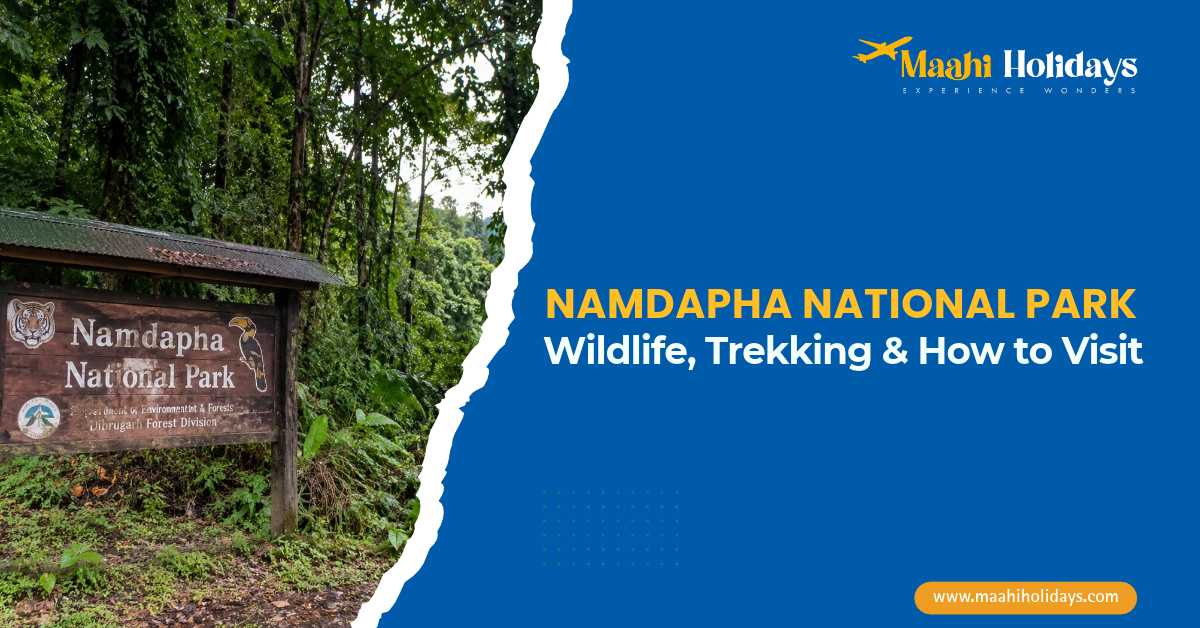





Namdapha National Park contains a range of natural wonders. Located in Changlang district near the border between India and Myanmar, it has tropical rainforests, rivers, and rocky hillsides, with a range of diverse wildlife habitats. It is a great place to get away from busy tourist attractions and enjoy a more tranquil side of North East India.
During your visit, you will be able to explore the forest and listen to the locals' birdsong. A wide variety of plant life can be observed, and the Noa-Dihing River provides a beautiful backdrop. Trekking enthusiasts will also enjoy exploring the remote campsites and challenging routes within this area.
As these locations are remote and surrounded by dense forests, it is important to make the appropriate preparations. Ensure permits, accommodation, and transport have been arranged.
Where is Namdapha National Park located?
Namdapha National Park is in Changlang district in Eastern Arunachal Pradesh, close to the border with Myanmar. It extends to the border with Myanmar. It covers an area of 1985 km 2, making it one of the largest National Parks in India.
From altitudes of 200 m to over 4500m, there is a wide range of forests in Namdapha. These include tropical evergreen, subtropical, temperate, and alpine.
There is a river running through the area, the Noa-Dihing. Miao is the main entrance to the area, while Deban is a great base point to explore the forest.
The area is very important for wildlife conservation. In 1983, it was officially declared a National Park and included within Project Tiger. Due to the variety of habitats, the area is home to a range of endangered species. There is an impressive amount of both animal and plant life in the area.
Wildlife to look out for in Namdapha National Park
Namdapha has a variety of habitats and contains a wide variety of wildlife. During a visit, you may be able to spot mammals, birds, reptiles, butterflies, and a variety of small forest animals. However, due to the dense vegetation within the area, wildlife may be difficult to spot; patience will be required.
Bengal Tiger:
Bengal tigers are common predators within this area. The large area of forest provides suitable habitats to sustain the prey animals required to support this predator. Tigers can be difficult to spot because direct sightseeing is uncommon. As visitors, you should follow designated trails rather than attempting to track these animals independently.
Clouded leopard:
Clouded leopards are present in this area. They have large cloud-like spots on their fur, helping them blend in with the forest. This type of leopard is very adapted to climbing. They climb trees in the dense vegetation, often to live, move around, and hunt.
Leopard and snow leopard:
Snow leopards ( Panthera Uncia) are elusive and inhabit very high-altitude terrains. Their strong physical features are well adapted to withstand extreme cold conditions or snowy, rocky terrain.
Snow leopards are associated with Nampada National Park owing to its unique status as an abode for 4 species of big cats, representing the high-altitude diversity of large cats.
This shows the variety of habitats present in the area and highlights its importance in supporting wildlife. However, as each species lives in different conditions, you may struggle to spot them on a typical wildlife spotting trip.
Hoolock Gibbon:
Hoolock Gibbons have long limbs to allow them to move around between the branches of the trees. In the mornings, it may be possible to hear the distinctive call of these primates echoing around the forest. Even if you cannot see them clearly, hearing their call can make nature walks very interesting.
Other mammals:
The park also has Asian elephants and Asiatic black bears, gaur, and deer. They rely on the forest for shelter, food, and to move between different habitats. While walking in the park, you may be able to spot animals' footprints or feeding areas. This can be a great way to experience the wildlife without disturbing them.
Birdwatching opportunities:
Due to the variety of forest environments in the area, there are many birds to spot here.
These include -
- White-winged wood duck
- Great Hornbill
- Wreathed Hornbill
- Variety of Pheasants
- Jungle Fowl
- Many forest songbirds
Going on a walk in the early morning can give a great opportunity for birdwatching. Using binoculars can allow you to get a good view of birds at the top of the trees without disturbing them.
Trekking routes and campsites in Nandapha National Park
Trekking allows you to discover the forest; the routes pass through dense vegetation, streams, riverbanks, and remote camping locations. Some areas you can walk for a short distance, while others require multiple days.
Deban to Haldibari:
Deban is a key point to visit within the area. It is situated next to the Noa-Dihing River; you can explore several forest areas and camping locations.
As a visitor, you can reach this campsite through river-crossing arrangements made with the forest authorities, depending on water conditions.
The route introduces trekkers to the forest’s natural surroundings, including different plants, birds, and river views. An overnight stay can also give you an opportunity to experience the peaceful forest atmosphere.
Hornbill Glade:
This area is a great place for bird watchers. Due to the presence of Hornbills in the surrounding area, it may be possible to spot them flying between trees or resting on branches.
You can also see the wonderful plant life in the area and listen to a variety of bird songs. Bringing binoculars can make this a very rewarding experience.
Bulbulia:
This is a popular place for trekking and camping due to natural springs and the surrounding forest; it is a great place for nature lovers. Over here, you should carry suitable trekking shoes because the routes os these places pass through uneven terrain, and certain sections might be slippery. So it's better to carry your essential things with you in this place.
Firmbase:
It is a remote camping area situated next to the Noa -Dihing River. This trek from Deban covers a considerably longer distance and takes you through dense forest sections.
To complete this trail, you must be in good physical condition. It is recommended that you confirm the route, whether a guide is available, and what food will be provided with the forest officials.
Gandhigram:
Gandhigram lies towards the southern parts of Namdapha and is inhabited by the Lisu group (Youbin). Due to its being very remote, it can be a challenging destination. Depending on the route taken from Deban and the local weather, this trek can take several days. It is best suited for experienced trekkers, and it requires long walks through the remote forest. This visit also allows you to learn about the local culture.
Things to do in Namdapha National Park
Along with long trekking routes, there are many activities you can do in Namdapha National Park.
Birdwatching: Watch hornbills, wood ducks, and other forest birds.
Photography: Capture images of birds, butterflies, plant life, and great river views.
Nature walks: Explore accessible areas in Deban with an authorised guide.
Camping by the river: Stay in a designated camping area by the Noa-Dihing River. Make sure that you get permission to do this.
Cultural visit: Learn about local cultures in nearby villages, such as the Tangsa and Lisu. You should always respect local traditions and get permission to take photos.
Permits and entry requirements
Before you visit Namdapha, you should arrange the necessary documents and permissions.
Indian travellers: You require an Inner Line Permit (ILP) to enter Arunachal Pradesh. Apply using the official permit system in the state.
International visitors: Check what protected area permits ( PAP) are required for your visit.
Entrance to the park: Contact the forest officials to check how much it costs to enter and what the current conditions are.
Trekking permissions: Make sure to get permission to spend the night , camp, and to trek in restricted areas of the forest.
Ensure you have valid ID: Permissions and costs may change; therefore, please make sure to check the most up-to-date information before visiting.
So it's very important to carry valid identification and keep copies of your travel documents.
Best time to visit Namdapha National Park
It is better to know the best season and time to explore, and it is easier for trekking.
October-November: The forest will still be green following the monsoon, and activities can begin to be carried out with ease.
December-February: The forest will still be green following the monsoon, and activities can begin to be carried out with ease.
March-April: Temperature will begin to increase. Outdoor activities can still be done; however, we recommend checking local conditions.
May to September: As there is heavy rainfall in this period, it may be difficult to get to the area or undertake trekking routes; leeches and slippery paths can also cause issues with exploring the forest.
November to February: Many people find this season to be a pleasant time to visit. We recommend checking the forecast and current conditions of the park before fixing a date to visit.
Final thoughts
Namdapha National Park is a great way to experience the natural side of Arunachal Pradesh. The variety of habitats throughout the area means rare animals and birds can be found. Combined with the Noa-Dihang River and remote camping areas, this makes the area very attractive.
Whether you explore the forest around Deban or plan a longer trek to Firmbase, you can appreciate the beautiful natural environment of the area and understand its importance in conservation.
You should also make sure to get the correct permissions, transport, and accommodation organised. To arrange a well-planned visit, you can contact Maahi Holidays, as they can assist in customizing the itinerary.
FAQs:
Q1. In which state is Namdapha National Park located?
➤ It is located in Arunachal Pradesh, in the district of Changlang.
Q2. What is Namdapha National Park famous for?
➤ The national park is known for its diverse flora and fauna, thick tropical forests, rare wildlife species, and great treks. Big cats are recorded here, including tigers, leopards, clouded leopards, and snow leopards.
Q3. What is the best time to visit Namdapha National Park?
➤ The best time to visit Namdapha National Park is between October and April. Please check local weather and access to the forest before visiting.
Q4. Can tourists go trekking in Namdapha National Park?
➤ Trekking is available in the forest. You can visit areas like Deban, Haldibari, and other forest camps. As with all treks, you will need to check with the forest for current conditions, permissions, and weather.
Q5. Is permission required to enter the park?
➤ As a visitor, you need the required entry permissions. Foreign tourists may require further permission according to the entry guidelines of Arunachal Pradesh. Please check with the appropriate authorities for the most up-to-date information.